
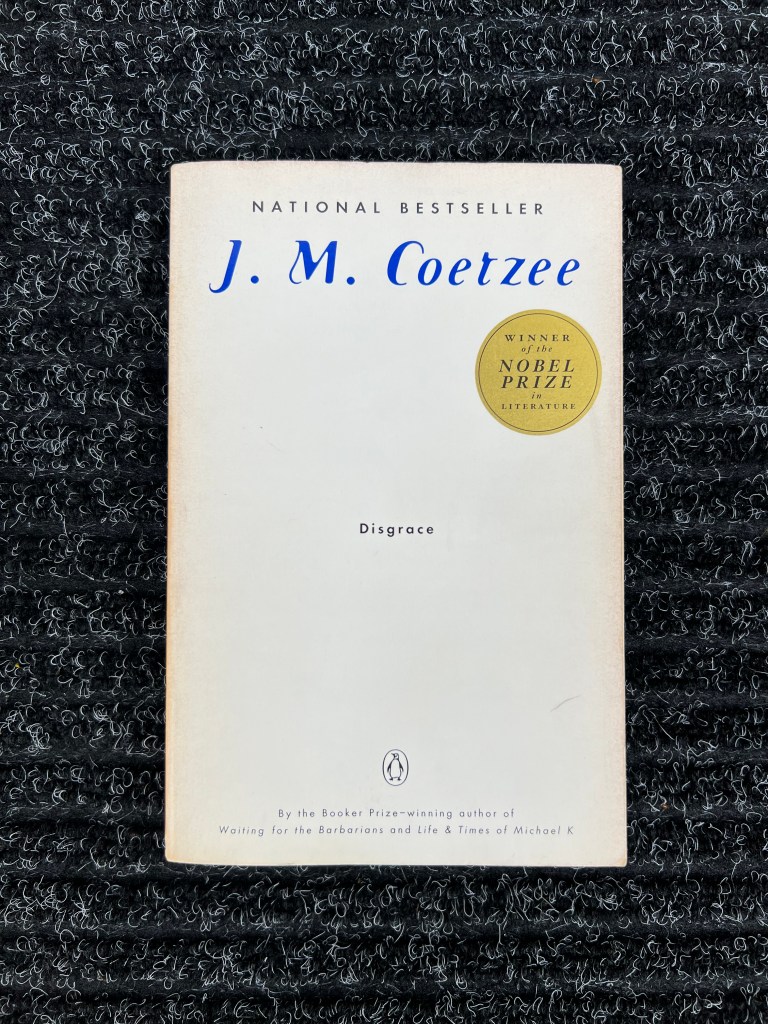
On my shelf since:
Late 2010’s, I think. One of those times when the MIL (see next blurb) was trying to clear out books from her basement. I, so helpfully, took two or three small paperbacks and left the three bookshelves of histories, archival cookbooks, travel guides, and favorite children’s books for another day. (Maybe that day is soon?)
My copy’s origin story:
(Paperback 1999) This probably started out as my father-in-law’s – the MIL’s taste runs more to holocaust survival and Kristin Hannah. I read the whole thing wondering what he might have made of it.
Why not until now:
Looked bleak. (Not wrong)
Review:
In the end David Lurie, the main character, decides he is “Not a bad man but not good either” and that works for the book as well. Except for being sexist, racist, ageist, colonialist, and having a deeply unlikeable protagonist, it’s not an entirely bad book. Except for being complex and well-written, tackling difficult themes and times, developing a variety of interesting if somewhat impenetrable characters, and showing evidence at the end that Lurie might just be learning something (hinted at in the last sentence) and that the female and the Black South African characters might just be actual people, it’s not a good book either. It’s hard not to think that the limited, self-absorbed, abusive, smug, frustrating, do-not-invite-this-guy-to-Thanksgiving character he is for 99.99% of the book is the one that the author is the most invested in. And maybe sees himself in? I didn’t like him (as you may have guessed) and I didn’t understand him, and I also wonder now how I would feel about the author. Why are some characters so hard to disentangle from the author? I spent the whole book thinking “Is this what the author thinks or what he thinks this guy thinks?” (I don’t have these issues with the Thursday Murder Club books, but then again I like those characters!) Made my brain hurt.
One more thing in the well-done category: the viewpoint is so strongly written that I often struggled to see outside of Lurie’s perspective. His deeply flawed arguments and choices, as maddening as they felt, came across somehow as the best ones for him in the moment. Like him, I regularly found the other characters’ perspectives impenetrable (Oops – used that before) and his logic sound enough. At one point quite near the end when he is clearly on his journey of understanding and is wondering how he could live with himself if anything were to happen to his daughter, he is asked, “Is that the question (you should be asking yourself), David?” He doesn’t know and I wasn’t entirely sure either which was driving me crazy. With a little distance and some of my irritation waning with time, I’m beginning to see the light at the end of that patriarchal tunnel. Lurie is a rolling stone slowing down a little by the end of the book and finally beginning to gather some useful moss (that is, perspective if not exactly empathy). Okay, after writing this review I appreciate much better what this author was doing – but I still don’t like the main character. (Finished book December 7, 2025)
Payoff (pages per stars):
220/4 = only 55 pages of reading for each star. What is it about these short books that I don’t enjoy reading but are so well crafted? (I really need a new/another metric!)
(Still trying out other metrics for the mathy among us, and will take suggestions):
- Frustration index: Number of pages over Number of times I wanted to throw this book down and step on it: (220/50): 4.4
Misc Ratings (Out of 5):
- How much I wanted to punch this guy most of the time: 4
- How much you should read this if you like dogs (or people): 0
- Concerns about watching John Malkovich starring in the movie: 5
Bechdel Test: Big Fail! (more on this later)
 Off The Shelf
Leave a comment